What 'dirty' actually means inside ductwork
The term covers several different conditions. In offices and managed buildings it is usually fibrous dust and particulate build-up on the internal surfaces of supply ductwork, in fan coil unit casings and on AHU coils. In hospitality and food service it is grease coating extract ductwork and canopies. After construction or refurbishment it is fine debris, packaging fragments and protective film left in the system.
Each of these is addressed by ductwork cleaning methods appropriate to the contamination type and the access available.
Warning sign 1 — visible dust and debris
Dust accumulating on supply grilles, streaking on diffuser faces and grey staining around outlets are the most common visible signal. Inside the ductwork the loading is usually heavier than the visible evidence suggests, because grilles act as a partial filter. By the time it is obvious at the diffuser, the duct internals warrant inspection.
Warning sign 2 — odours
Persistent musty, stale or "office smell" complaints often originate inside ventilation components: damp coil pans, biofilm on cooling coils, contaminated insulation in plenums or grease deposits in extract ducts. Air fresheners do not solve this. An internal inspection of the supply path, AHU and extract usually locates the source quickly.
Warning sign 3 — poor or unbalanced airflow
When fans are running harder to deliver less air, internal restriction is a likely cause. Fouled coils, loaded filters in fouled housings, and partially blocked ductwork all push the system off its design point. The energy cost of running fans against avoidable resistance is significant over a year.
Warning sign 4 — visible contamination at access
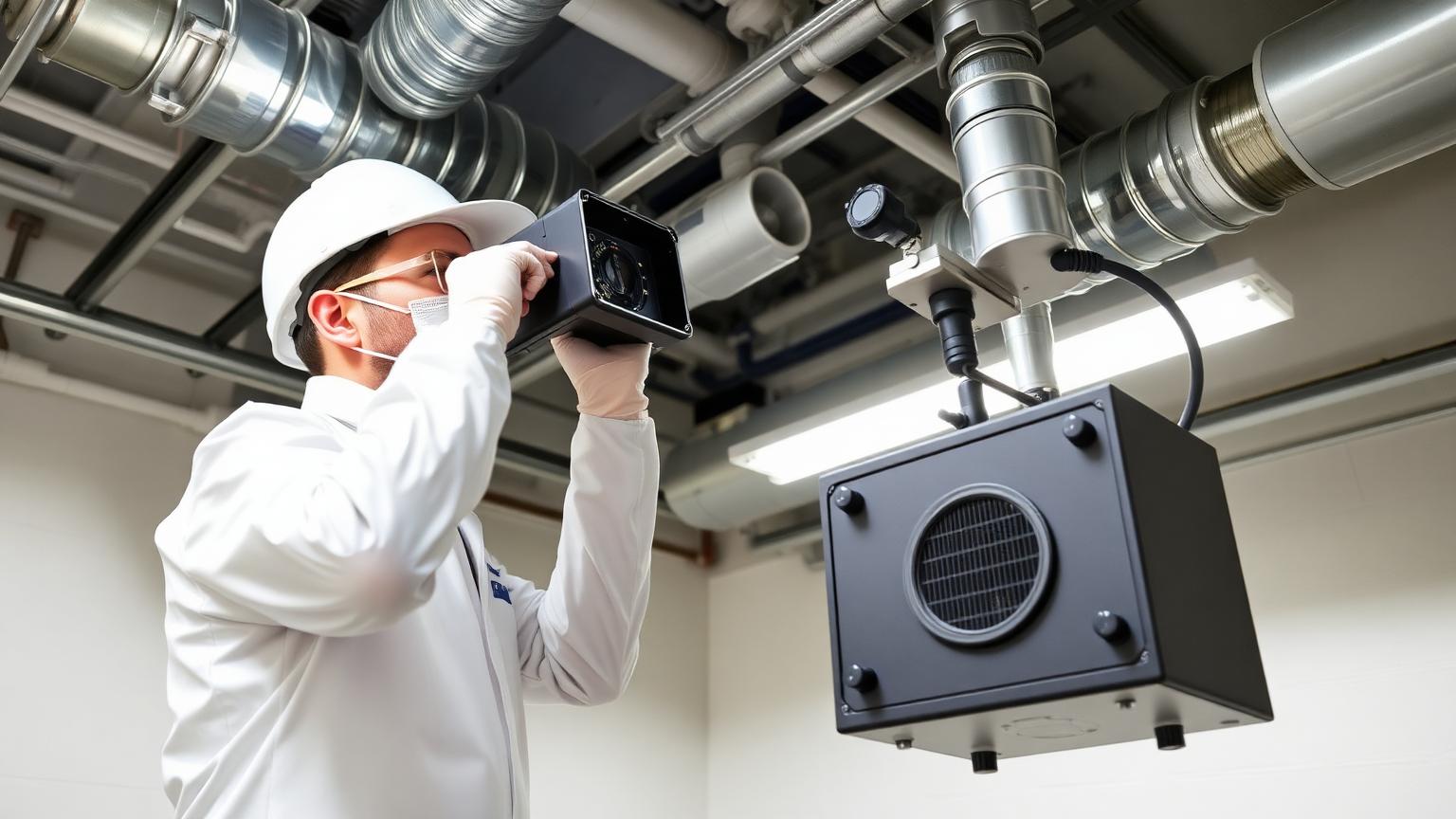
Where access doors exist, a basic internal inspection will tell the story. Heavy dust layers, microbial growth on internal surfaces, or grease deposits in extract ducts are all conditions that should trigger a planned hygiene response. A formal inspection records the condition, photographs it and grades the cleaning priority.
Warning sign 5 — occupant complaints
Complaints about stuffiness, headaches at desks, dry or stale air, or "that smell when the AC comes on in the morning" are useful operational signals. They are not, on their own, a clinical diagnosis — and this page is not making medical claims — but they are reliable indicators that the ventilation system warrants a closer look.
Risks of leaving it
- Increasing fan energy demand and falling system performance.
- Accelerated fouling of coils, fans and filter housings, shortening asset life.
- In kitchen extract systems, accumulating grease that is widely recognised as a fire risk.
- Reputational risk with tenants, occupiers and incoming occupiers asking ESG and IAQ questions.
- Higher remediation cost — a planned clean is cheaper than a reactive deep clean of a heavily fouled system.
What to do next
The right starting point is almost always a documented ventilation system inspection. It establishes the current condition, identifies any missing access, and gives a basis for a sensible, condition-based cleaning plan.
If the symptoms above are already obvious, you can request a quote for a remedial clean and we will scope the works against what we find on site.
Get a ventilation hygiene quotation
Speak to the VentilationHygiene.org team about a TR19-aligned scope of works, a ductwork survey or a planned ventilation hygiene programme.