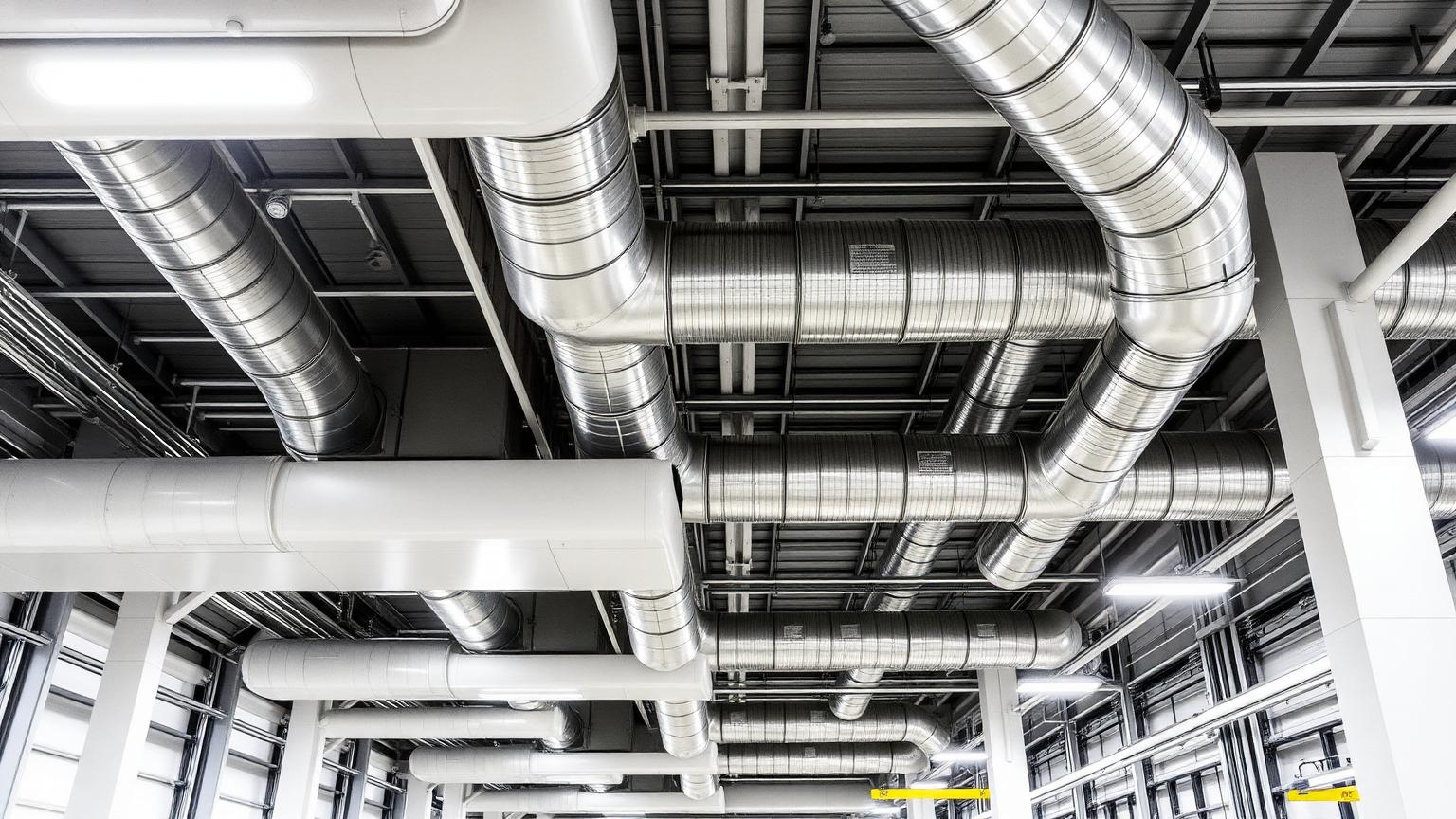
What HVAC duct cleaning covers
HVAC duct cleaning is the controlled removal of dust, fibre, microbial growth and general debris from the internal surfaces of a heating, ventilation and air conditioning system. In most commercial buildings that means the full path of conditioned air: the air handling unit, supply ductwork, attenuators, volume control dampers, fire dampers, VAV boxes, fan coils, plenums and the diffusers and grilles at the room face. Return and recirculation ductwork is treated to the same standard, because contamination on the return side is reintroduced to the supply air on the next pass.
Cleaning is delivered with HEPA-filtered negative pressure extraction, rotary brushing and compressed air agitation, working in controlled sections through purpose-cut or existing access doors. The aim is a measurable improvement in HVAC hygiene and ventilation cleanliness against a written standard, not a cosmetic clean.
Why HVAC hygiene matters in commercial buildings
In a typical office, the HVAC system moves the building's air several times every hour. Anything accumulated inside the ductwork — settled dust, shed fibres, biofilm on cooling coils, microbial growth on damp insulation — is in the breathing zone of every occupant. Visible dust at supply diffusers, odours at start-up, condensation around grilles and rising complaints about stuffiness are all symptoms of an HVAC system that needs hygiene attention.
There is also a clear plant impact. A fouled cooling coil loses heat-transfer efficiency, a partially blocked duct forces fans to consume more energy to deliver the same airflow, and dirty filters are changed more often than they should be. A properly scoped HVAC duct cleaning project typically restores design airflow at the diffusers, reduces fan energy and extends the useful life of filters and coils.
Inspection, contamination assessment and planning
Every project starts with an inspection. Our engineers open the system at representative points, record the internal condition photographically and — where the scope calls for it — take quantitative deposit measurements in line with the BESA TR19 method. From that survey we produce a written scope of works that identifies which sections require cleaning, which require additional access doors, and which can remain on a routine inspection cycle.
This inspection-led approach matters. Cleaning every metre of ductwork in a large building when only the AHU and the first 20 metres of supply duct are heavily loaded is poor value. A documented contamination assessment lets us target the cleaning where it is needed and plan future cleans around the actual deposition rate of the building.
Supply and return ductwork — what we clean
On the supply side we routinely clean:
- AHU internal surfaces, coils, drain pans, fan scrolls and filter housings
- Main supply ductwork, attenuators and acoustic linings
- Volume control dampers, fire dampers and smoke dampers (visual inspection only on fire dampers)
- VAV boxes, fan coil units and trench heaters
- Supply diffusers, swirl diffusers and linear slot grilles
On the return and recirculation side we clean transfer grilles, return plenums, return ductwork and any recirculation paths through the AHU. Where return air passes through a ceiling void used as a plenum, the hygiene of that void is reviewed as part of the survey.
Evidence, reporting and next steps
Every HVAC duct cleaning project is closed out with a written report covering the agreed scope, the pre-clean condition with photography, the cleaning methodology used, post-clean photography and the TR19 cleanliness classification achieved. The report is suitable for the building's compliance file and for onward sharing with landlords, insurers and incoming tenants.
For buildings with no recent cleaning records we typically recommend starting with a ventilation system inspection or a ventilation risk assessment. For systems already on a known cycle, a direct duct cleaning or TR19 duct cleaning scope is usually the most efficient path.
To begin, request a quote, book an inspection or contact us.
Get a ventilation hygiene quotation
Speak to the VentilationHygiene.org team about a TR19-aligned scope of works, a ductwork survey or a planned ventilation hygiene programme.