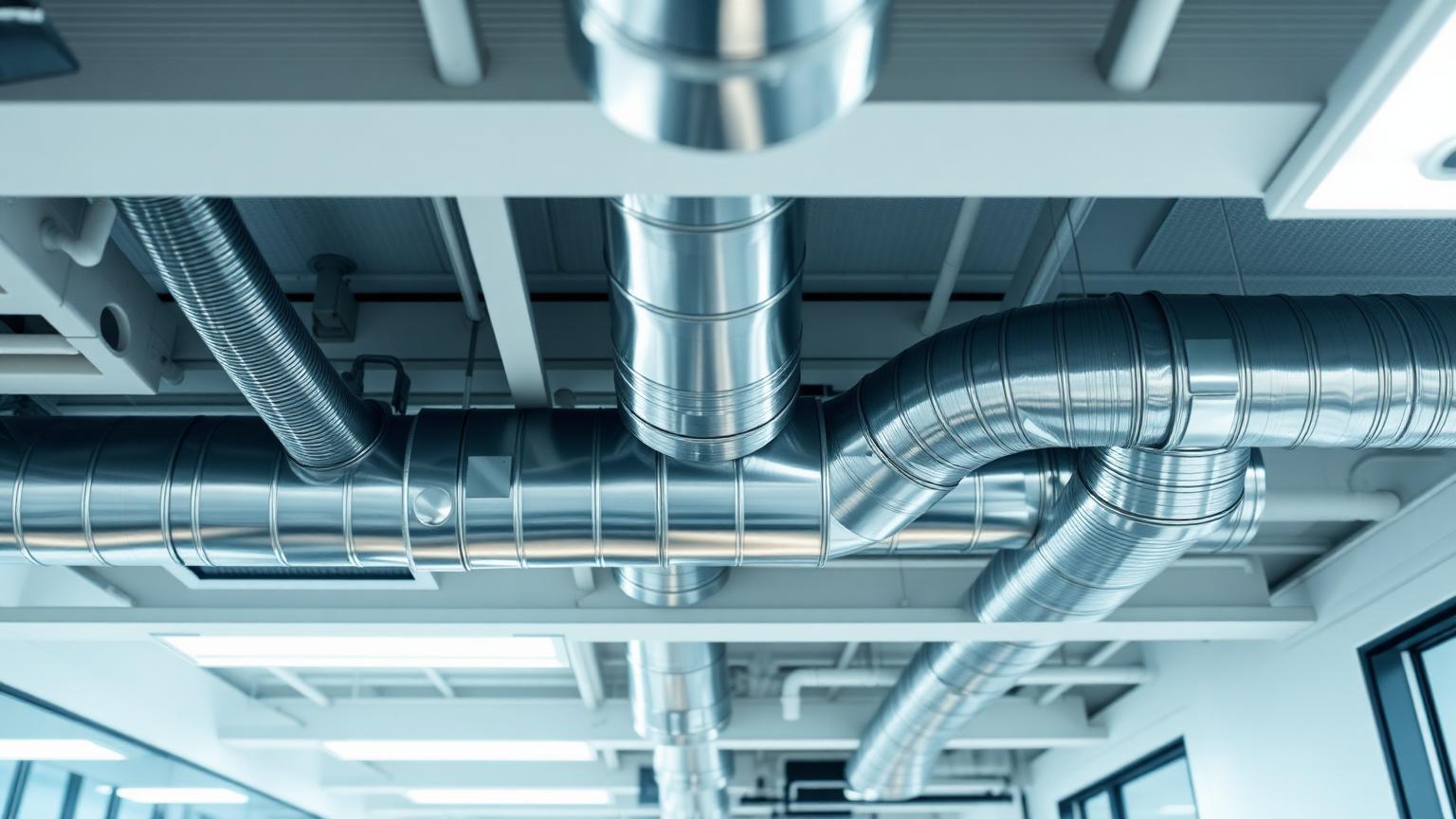
What duct cleaning involves
Duct cleaning is the controlled removal of dust, fibre, biofilm, debris and — in extract systems — grease from the internal surfaces of a ventilation system. In a typical commercial building this covers supply ducts, return and extract ducts, fan coil units, VAV boxes, attenuators, fire and volume control dampers, grilles, diffusers and, where applicable, the air handling unit. The objective is a measurable improvement in ventilation duct cleaning outcomes against a defined standard — most commonly the BESA TR19 internal cleanliness benchmark.
Cleaning is delivered with HEPA-filtered negative pressure extraction, rotary brushing, compressed air whips and manual access through purpose-cut inspection panels. Where the ductwork has no existing access, new hinged access doors are installed to a recognised standard so that future inspections and cleans can be carried out without further disruption to the system.
Why commercial ductwork cleanliness matters
Internal ductwork cleanliness directly affects four things in a commercial building: indoor air quality for occupants, the energy performance of the HVAC plant, the fire risk profile of any extract systems and the compliance position of the duty holder. Dust loading reduces effective duct area and forces fans to work harder. Biofilm on cooling coils degrades heat transfer and seeds odour problems. Grease in kitchen extract ductwork is a recognised fire risk. None of these problems resolve themselves — they accumulate until the system is cleaned.
A planned commercial ductwork hygiene programme reverses that drift, brings systems back to a measurable standard and creates the documentation a landlord, insurer or fire risk assessor expects to see.
Our duct cleaning process
Every duct cleaning project follows the same disciplined sequence:
- Site survey and access review. We walk the system, identify access points, photograph the current condition and confirm working hours, isolation and permit requirements.
- Written scope and quotation. A clear scope of works mapped to TR19 deliverables, with a fixed price and a programme that fits around the building's operating hours.
- Pre-clean inspection. Photographic and, where specified, quantitative deposit measurement recording the system's starting condition.
- Cleaning works. HEPA-extracted, mechanically agitated cleaning of internal duct surfaces, fan coils, dampers and terminal devices, working in controlled sections.
- Post-clean verification. Photographic evidence, deposit re-measurement where applicable, and a written PCV report referencing the TR19 standard and the system condition achieved.
- Hand-back and maintenance recommendation. Access doors closed off, system returned to service and a recommended re-inspection frequency aligned to system usage.
Systems we clean
Our engineers regularly clean and verify the following commercial ventilation systems:
- Office supply, return and extract ductwork
- Air handling units (AHUs), including coils, drain pans, filter housings and plenums
- Fan coil units and VAV boxes
- Kitchen extract canopies, grease filters and ductwork
- Toilet and changing-room extract systems
- Car park, plant room and back-of-house extract
- Laboratory, healthcare and cleanroom-adjacent ventilation
Evidence and reporting
Every duct cleaning project is delivered with a written report that documents the scope, the pre- and post-clean condition with photography, any deposit measurements recorded, the cleaning methodology used and the TR19 cleanliness classification achieved. The report is suitable for inclusion in the building's compliance file and for sharing with insurers, fire risk assessors and incoming tenants. For multi-site clients we can deliver a consistent reporting template across the portfolio.
Get a duct cleaning quotation
Most commercial enquiries lead to a written quotation within one working day. Larger or multi-site projects start with a no-obligation site survey. To begin, request a quote, book an inspection or contact us.
Get a ventilation hygiene quotation
Speak to the VentilationHygiene.org team about a TR19-aligned scope of works, a ductwork survey or a planned ventilation hygiene programme.