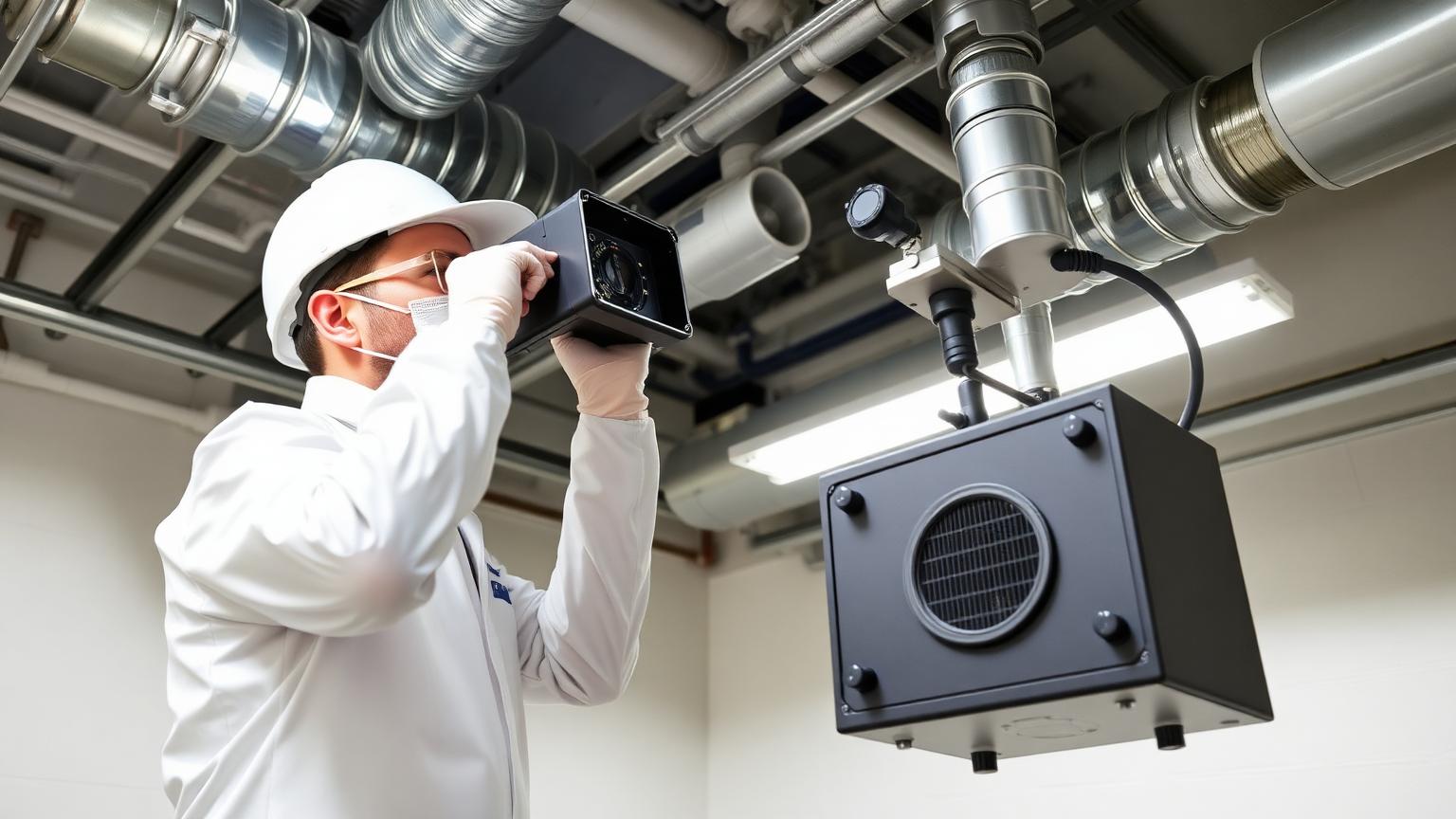
What a ventilation system inspection involves
A ventilation system inspection is a structured, evidence-based review of an existing ventilation system. Our engineers walk the system from the AHU outwards, identify every existing access door, open the system at agreed representative points and photograph the internal condition. Where the brief calls for it — typically on systems where cleaning frequency is in dispute — we also take deposit thickness measurements in line with the BESA TR19 method.
The output is a written audit covering: the system as found, the access provision (or lack of it), the photographic record at each inspection point, any safety or compliance concerns observed and a clear set of cleaning recommendations. The audit is not a sales document — sections that do not require cleaning are recorded as such.
Ductwork inspection and access points
Meaningful ductwork inspection depends on access. In older buildings, large sections of ductwork have no access doors at all, and the only honest answer to "what is the internal condition?" is "we cannot see it from here." Part of our inspection therefore records the existing access provision and identifies where additional doors are needed before a credible inspection — or any subsequent clean — can be carried out.
Where access already exists, we use rigid borescopes and inspection cameras to record internal surfaces without needing to enter the duct. Where access is genuinely impossible without further works, we say so in the report and recommend the access door installation as a separate scope.
Hygiene condition assessment
Each inspection point is graded for hygiene against a consistent set of criteria: surface dust loading, visible biofilm or microbial growth, presence of standing water in drain trays, fibre release from internal insulation and any obvious mechanical defects. For systems requiring it, deposit thickness is measured with a vacuum test on a sticky-sample pad and recorded in mg/100cm² as set out in TR19.
The resulting hygiene condition assessment gives each section of the system a clear status — clean, light deposition, moderate deposition or above the TR19 action threshold — and identifies which sections should be cleaned, which can be deferred and which require remedial work beyond cleaning (damaged insulation, corroded panels, failed drain traps).
Photographic evidence and reporting
Every inspection point is photographed and labelled in the report against a system schematic so that the evidence is traceable. For buildings on a rolling inspection cycle, this builds a year-on-year record of deposition rates and gives the facilities team a defensible basis for adjusting cleaning frequencies — up or down — based on what the system is actually doing rather than a generic calendar.
Cleaning recommendations and maintenance planning
The inspection report closes with prioritised cleaning recommendations: which sections need cleaning now, which need cleaning at the next planned shutdown, which can be deferred to the next inspection and which require access works or insulation repair first. Frequencies are recommended per system rather than per building — a kitchen extract may need quarterly attention while the office supply ductwork in the same building is on a three-year cycle.
For multi-site clients we use the inspection programme as the input to a portfolio-level ventilation risk assessment so that cleaning budget can be deployed where the evidence says it is most needed.
Book a ventilation system inspection
To arrange a ventilation system inspection, book an inspection, request a quote or contact us. If the inspection identifies cleaning needs, see our duct cleaning, HVAC duct cleaning and TR19 duct cleaning services.
Get a ventilation hygiene quotation
Speak to the VentilationHygiene.org team about a TR19-aligned scope of works, a ductwork survey or a planned ventilation hygiene programme.