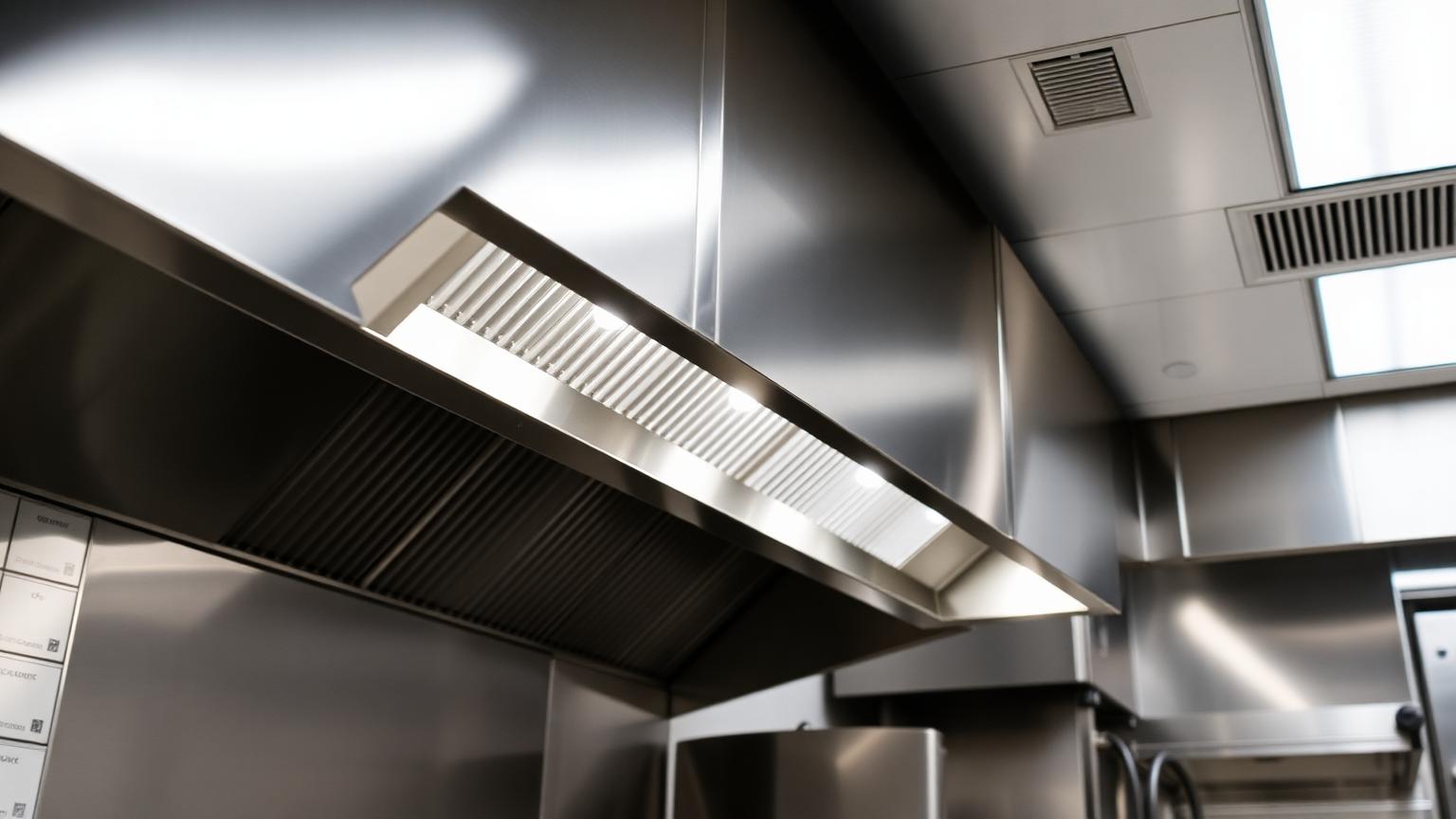
What extraction duct cleaning covers
Extraction duct cleaning is the controlled removal of grease, particulate, fibre and process residue from the internal surfaces of an extract system. In a commercial kitchen that means the canopy plenum, grease filters, riser and horizontal ductwork, any in-line fans and the discharge fan and cowl at roof level. In an industrial setting it can also include LEV ductwork serving manufacturing processes, laboratory fume extract and combustion-product flues serving plant.
The work is delivered by trained technicians using manual scraping, brushing and approved degreasing chemistry on grease-bearing systems, and HEPA-extracted mechanical cleaning on dry industrial extract. Access doors are installed where the ductwork has none, so that future cleans can be carried out without cutting fresh access panels every visit.
Why grease extract cleaning matters
Grease that accumulates inside a commercial kitchen extract system is a recognised fuel for duct fires. Cooking aerosols condense on cool internal surfaces and build up as a hard, combustible deposit along the full length of the duct. A flash in the canopy or a flame from the cooking line can travel along that deposit and result in a serious fire above the kitchen ceiling — typically the worst possible place for a fire to start in a commercial building.
This is why the BESA TR19 Grease guidance exists and why insurers routinely ask building owners to evidence that grease extract cleaning is taking place at an appropriate frequency. The cleaning frequency is driven by usage hours and cooking type, not by a fixed calendar. A 24-hour wok kitchen accumulates grease in weeks; a part-time staff canteen in months.
Commercial kitchen extract systems
A typical commercial kitchen extract system clean covers:
- Removal, soaking and replacement of canopy grease filters
- Manual cleaning of the canopy plenum and internal lighting housings
- Riser and horizontal ductwork cleaning with installation of access doors as required
- In-line and discharge fan housing cleaning
- Roof cowl and weathering inspection
- Deposit measurement at representative points before and after cleaning
We plan kitchen extract work around service hours — typically overnight or during scheduled close periods — so that the kitchen is fully operational for the next service.
Industrial and process extraction
For industrial and process extract systems the contamination is rarely grease. It is process dust, fibre, welding fume residue, paint overspray or chemical condensate. Each requires its own cleaning method, waste handling route and PPE regime. Our engineers scope industrial extract jobs in person, agree the waste disposal route in writing and carry out the work under the relevant permits-to-work. For dedicated LEV testing or modifications we work with the building's appointed competent person rather than substituting for them.
Inspection evidence and cleaning records
Every extraction duct cleaning visit produces a written report containing: the system identified, the scope delivered, pre- and post-clean photography of representative sections, deposit measurements where taken, the cleaning methodology and chemistry used, the cleanliness condition achieved and a recommended re-clean date. The report is intended to support the building's fire safety file and to be shared with the property insurer and the fire risk assessor on request.
These records are most useful when they are consistent over time. We retain a copy of every visit so that year-on-year deposition rates can be compared and the cleaning frequency adjusted where the evidence warrants it. This is what turns kitchen extract cleaning from a recurring cost into an actively managed fire-risk control.
Plan an extract clean
To plan a kitchen or industrial extract clean, request a quote, book an inspection or contact us. For supply-side ductwork hygiene, see our duct cleaning, commercial duct cleaning and TR19 duct cleaning services.
Get a ventilation hygiene quotation
Speak to the VentilationHygiene.org team about a TR19-aligned scope of works, a ductwork survey or a planned ventilation hygiene programme.