What cleanliness means in a ventilation system
Cleanliness inside a ventilation system is not the same as cleanliness on a surface in the occupied space. A duct can look poor from the inside and still be performing within expected parameters, and a duct can look acceptable on a photograph and still be carrying enough fouling to affect indoor air quality or fan energy. Cleanliness has to be assessed in context — against the type of building, the function of the ductwork and the cleanliness level expected for that environment.
A credible cleanliness assessment combines visual inspection at multiple access points, photographic evidence, and where relevant a quantitative measurement of surface contamination. It is then graded against recognised guidance such as BESA TR19 rather than against an arbitrary "looks fine" judgement.
Ductwork cleanliness
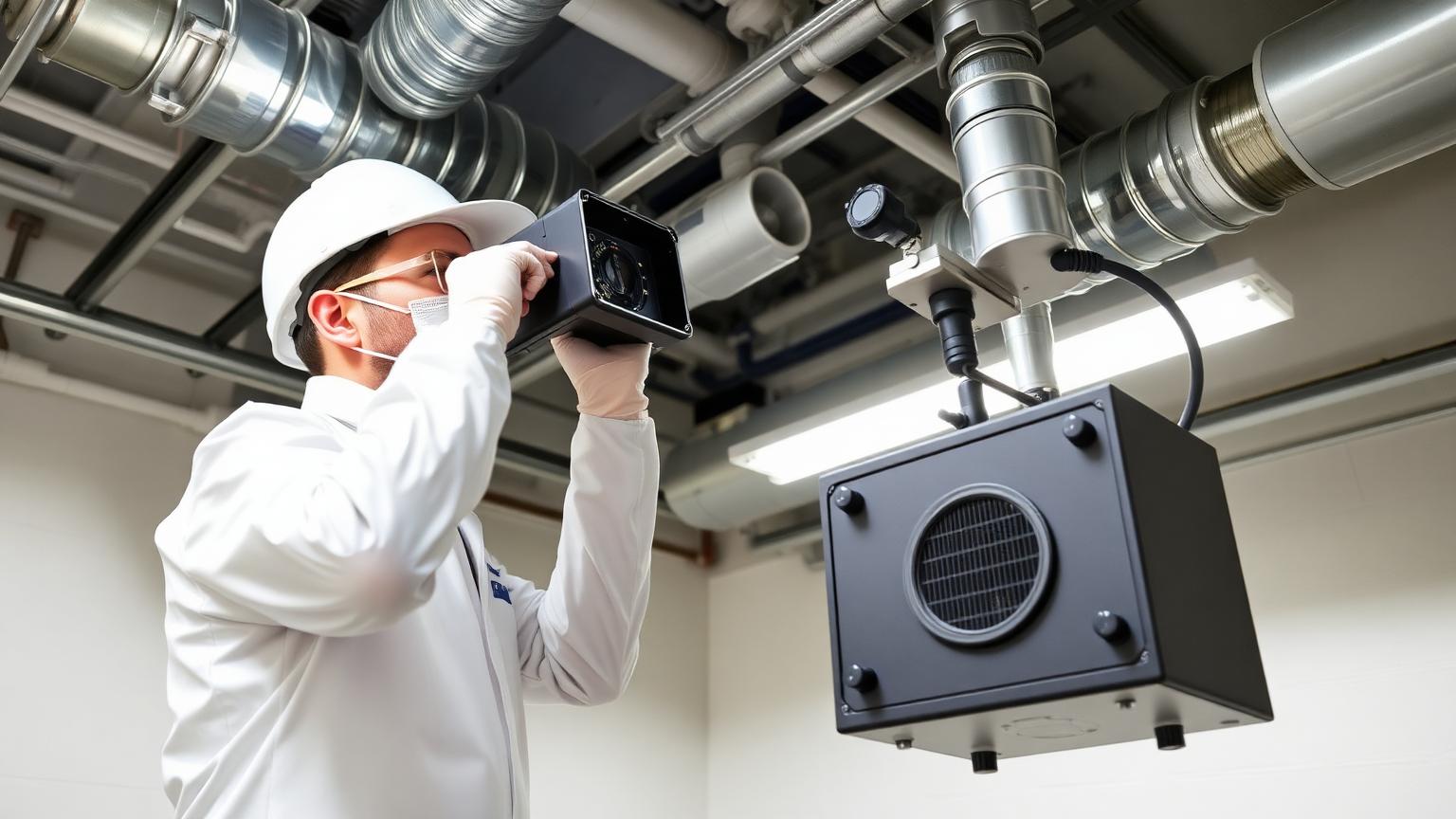
Ductwork cleanliness is assessed through access panels along the run, with attention paid to the leading edges of bends, downstream of fans and at low points where debris collects. Our duct cleaning service uses internal camera surveys to record condition before and after cleaning, and the report records the access points used, the sections inspected and any limitations encountered. Where contamination is widespread, the report grades the system as a whole rather than describing isolated pockets.
AHU cleanliness
AHU cleanliness has several distinct components: coil condition, drain tray condition, fan and motor housing condition, filter loading and frame seal integrity, and the condition of internal insulation and panels. Each of these can be acceptable individually while the unit as a whole is still in poor hygiene condition. Our AHU cleaning service assesses and reports each component separately, so the building operator has a clear view of where the actual issues lie.
Extract system cleanliness
Extract system cleanliness needs a different lens — extract ductwork is expected to accumulate the contaminants it is designed to remove, and cleanliness is assessed against the rate of accumulation, the type of contaminant and the cleaning interval. For kitchen extract this is particularly important because grease loading is also a fire-risk consideration. The wider context is covered on our ventilation system contamination page.
Visual inspection and common contamination indicators
Visual inspection focuses on a small number of indicators that experienced inspectors recognise quickly:
- Layered dust on duct floors, particularly downstream of bends or fans.
- Biofilm or wet residue on cooling coil leaving sides and in drain trays.
- Compacted dust on coil leading faces, restricting airflow.
- Visible grease loading on canopy plenums and lower extract duct runs.
- Degraded internal insulation shedding fibre into the airstream.
- Standing water, corrosion or microbial growth around condensate paths.
A formal ventilation system inspection converts these observations into a graded condition report and a prioritised plan of works.
How to prioritise cleaning works
Once an inspection has been completed, cleaning should be prioritised by hygiene risk first — heavily fouled coils, contaminated supply ductwork affecting occupants, grease-loaded extract systems — followed by systems where access improvements would unlock future inspection. Scheduling can then be aligned with the building's operational windows. This avoids the common mistake of cleaning whatever is easiest to access first and leaving the highest-risk systems for "next year".
Get a ventilation cleanliness assessment
To arrange a cleanliness assessment, request a quote, book an inspection or contact us.
Get a ventilation hygiene quotation
Speak to the VentilationHygiene.org team about a TR19-aligned scope of works, a ductwork survey or a planned ventilation hygiene programme.