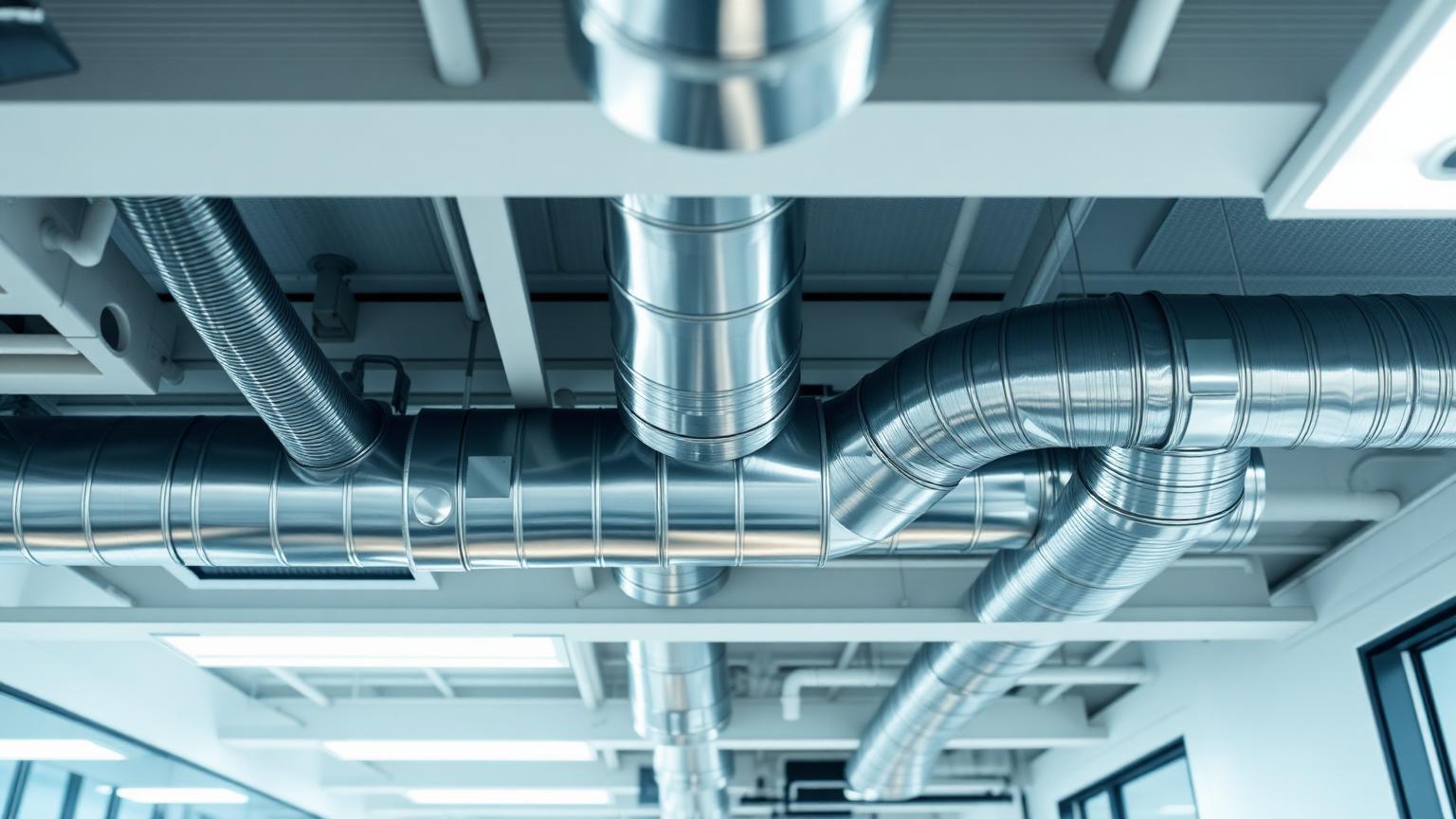
What our ventilation cleaning services cover
Our ventilation cleaning services cover the full set of mechanical components that move and condition air through a commercial building. That includes supply and extract ductwork, air handling units with their coils, drain pans and filter housings, fan coil units, VAV boxes, terminal grilles and diffusers, and the dedicated extract systems serving kitchens, toilets, plant rooms and car parks.
Each scope is built around the system we find on site. A small office with a single AHU and modest supply ductwork is treated very differently from a hospital ward with HTM-aligned ventilation or a multi-tenanted building with shared risers. The constant is method: HEPA-extracted, mechanically agitated cleaning carried out in controlled sections, with photographic evidence at every stage.
Inspection-led ventilation system cleaning
We rarely recommend cleaning a system without first inspecting it. An hour spent opening representative access points, photographing internal surfaces and — where useful — taking quantitative deposit measurements produces a far better scope than a generic line-metre quotation. It also protects the building owner from paying for work that is not needed, and identifies sections where additional access doors are required before any cleaning can begin.
This is the core principle of inspection-led cleaning: scope follows evidence. A documented pre-clean condition gives you a defensible baseline; the post-clean report shows what changed. For estates with multiple buildings, a consistent inspection protocol also lets you compare hygiene across sites and prioritise budget where it is genuinely needed.
Planned cleaning programmes for facilities teams
For facilities and FM teams managing more than a handful of buildings, ad-hoc reactive cleaning is rarely the best use of budget. A planned cleaning programme defines the inspection frequency, the cleaning frequency and the reporting format for each system, mapped to the way the building is actually used. Kitchen extract in a 24-hour operation is on a different cycle from kitchen extract in a staff canteen used three days a week.
A typical programme includes: an initial baseline inspection of every system in scope, agreed cleaning cycles per system type, fixed annual reporting against TR19, and an annual review where we adjust frequencies up or down based on the deposition rates we have actually observed. The result is predictable spend, defensible compliance evidence and far fewer fire-pump-callout-style surprises.
Service pathways — choosing the right starting point
Different buildings need different entry points. The most common service pathways are:
- No recent records: start with a ventilation system inspection to establish the baseline condition.
- Insurer or fire risk assessor request: a targeted TR19 duct cleaning scope with PCV reporting.
- Portfolio risk-profiling: a ventilation risk assessment to grade hygiene and fire risk across multiple buildings.
- Known cycle, due clean: a direct duct cleaning or commercial duct cleaning visit.
- Plant-room focus: AHU cleaning with coil, drain pan and filter housing hygiene.
Reporting that supports the building's compliance file
Every visit produces a written report — system identified, scope delivered, pre- and post-clean photography, cleaning methodology, TR19 classification achieved and a recommended re-inspection date. For multi-site clients the reporting template is consistent across the portfolio so that compliance leads, insurers and auditors see the same document structure regardless of which building they are reviewing. This is what makes commercial ventilation hygiene defensible rather than anecdotal.
Get started
To discuss a one-off clean, a planned programme or a portfolio-wide review, request a quote, book an inspection or contact us.
Get a ventilation hygiene quotation
Speak to the VentilationHygiene.org team about a TR19-aligned scope of works, a ductwork survey or a planned ventilation hygiene programme.