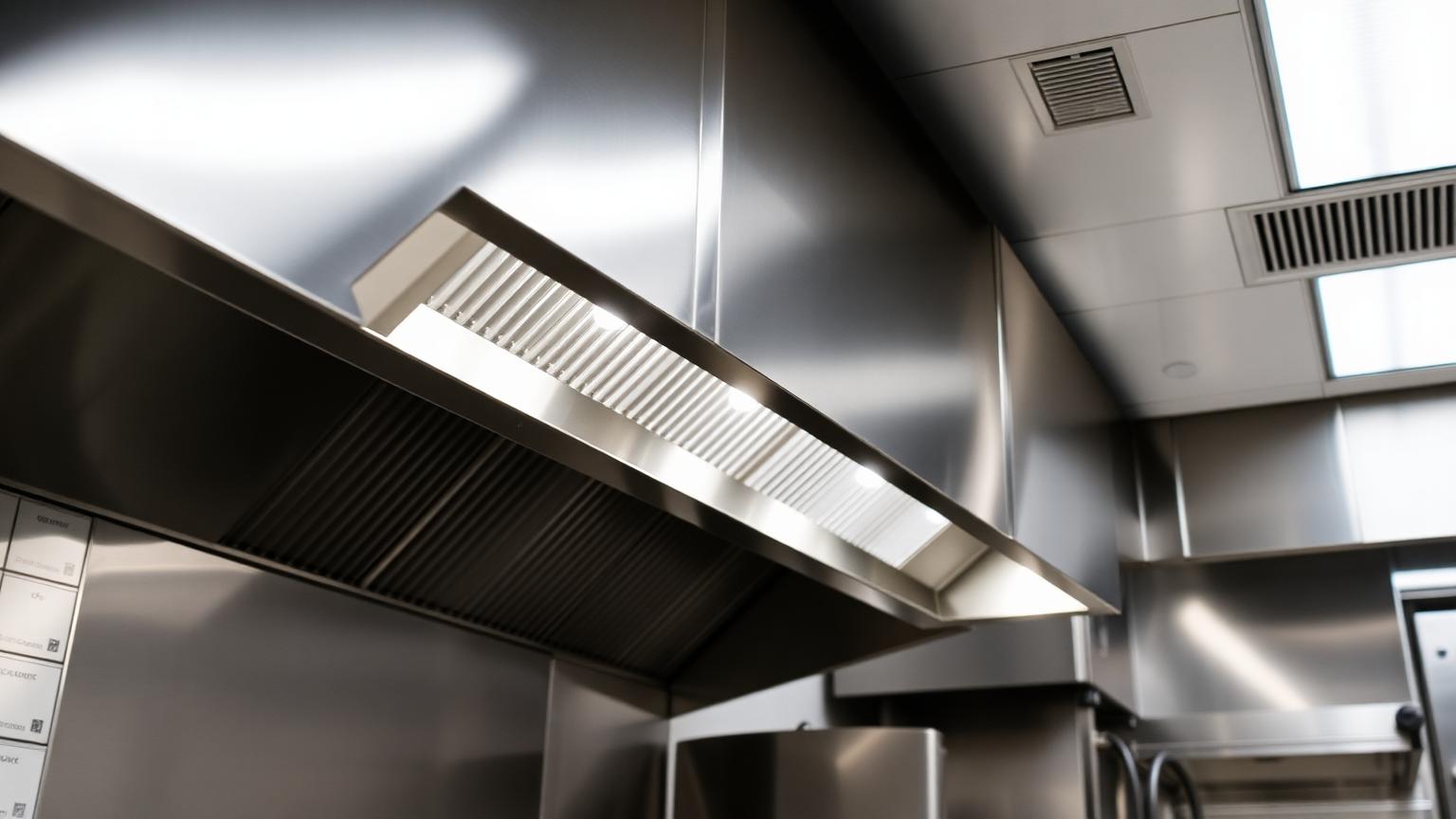
How grease accumulates
Hot cooking produces a fine, oily vapour. Canopy filters reduce the load but cannot remove all of it. The remaining vapour condenses on cooler internal surfaces — the canopy plenum, the horizontal duct runs, elbows and the discharge fan — and over repeated services it forms a continuous film. In heavily used kitchens that film grows measurably over weeks and months, not years.
Why it is treated as a fire risk
Accumulated grease is combustible. A flare-up at the cooking line can ignite deposits in the canopy or ductwork and propagate along the extract path. This is why the UK industry — through BESA TR19 Grease — and most commercial-kitchen insurers treat kitchen extract cleanliness as a distinct risk category, separate from general ductwork hygiene. This page describes that industry position; it does not make legal claims about any specific building.
What TR19 Grease defines
TR19 Grease is the part of the BESA specification dedicated to kitchen extract systems. It defines the measurable cleanliness standard (an average grease deposit thickness), a method for sampling it across the ductwork, and a recommended cleaning frequency band based on how heavily the kitchen is used. We work to TR19 Grease as standard — see TR19 duct cleaning.
Where grease accumulates fastest
- The canopy plenum directly above the cook line.
- Horizontal duct runs and the first elbows out of the canopy.
- Filter housings and grease drainage points.
- The fan housing and the discharge to atmosphere.
Access limitations
Many existing kitchen extract systems were installed without enough access panels to allow the full duct length to be inspected and cleaned. This is the single most common barrier to compliant cleaning. As part of a hygiene project we identify where additional access panels are needed and install them so future cleans cover the full system rather than the visible sections only.
Cleaning records
The deliverable insurers and operators actually keep on file is the post-clean report. It records the system covered, the methods used, the access points worked from, before-and-after photography of the canopy, ductwork and fan, any items deferred (with a reason) and the recommended next clean date. Without this evidence pack, the system being clean does not help at renewal.
How often kitchens should be cleaned
TR19 Grease provides indicative cleaning frequency bands for heavy, moderate and light use. In practice the right interval for a specific kitchen is set by inspection — the measured grease deposit thickness drives the schedule. A quick-service or 24-hour site will typically need quarterly cleaning; a moderate gastro pub kitchen may sit on a six-monthly cycle; a low-use staff canteen may be annual. The inspection record is what justifies the chosen interval.
What to do if you are unsure
If you do not have a recent inspection record for your kitchen extract system, the right step is an inspection rather than a speculative clean. The inspection will tell you the current cleanliness condition, where access is missing, and what cleaning frequency is defensible going forward. From there a planned programme is straightforward to put in place.
Book a kitchen extract inspection
Get a TR19 Grease aligned inspection of your kitchen extract system with photographs, measured deposit thickness and a recommended cleaning frequency.